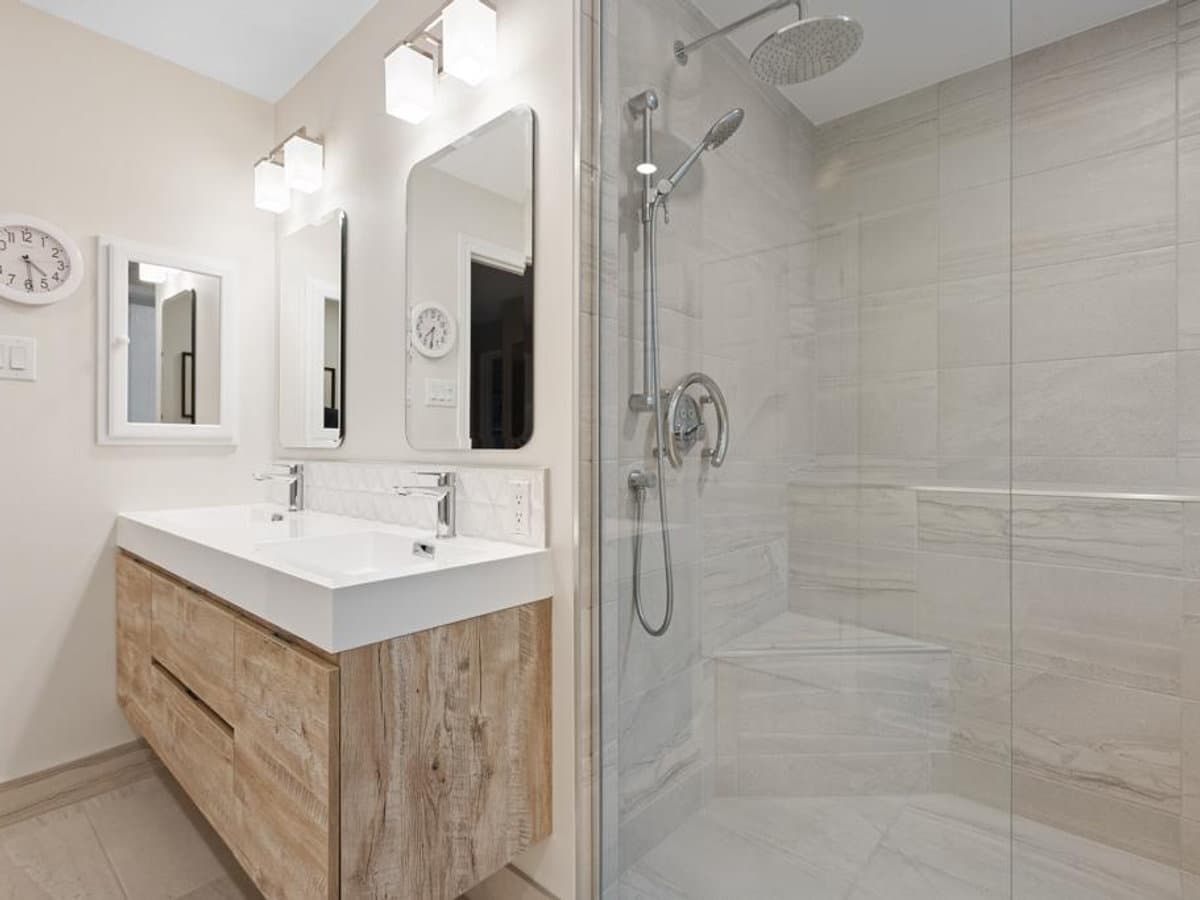
This complete guide to bathroom tile installation covers every phase of a professional bathroom tile project — from surface prep and waterproofing to grouting and sealing. Professional installation in Greater Boston typically ranges from $15–$35 per square foot installed (materials and labor combined, as of 2026 pricing). A full project includes surface preparation, waterproofing, substrate installation, tile setting, grouting, and sealing. Done correctly, professionally installed tile lasts 20–50 years. Done poorly, you face cracked grout, loose tiles, and water damage within a few years.
- Material costs range from $1–$20+ per square foot depending on tile type — ceramic, porcelain, or natural stone.
- Labor in Greater Boston runs $8–$18 per square foot for professional tile installation, based on current Greater Boston rates as of 2026.
- Surface preparation is the most critical phase — skipping it causes most tile failures.
- Waterproofing membranes like Schluter Kerdi or RedGard are required in wet areas and are often missed in DIY projects.
- A typical 50–80 sq ft bathroom floor takes 3–5 days from demo to final seal, including cure times.
- Order 10–15% extra tile to account for cuts, waste, and future repairs.
What Is Involved in a Complete Bathroom Tile Installation?
A complete bathroom tile installation covers every phase from demo to finishing seal. Each phase must be done in order — there are no shortcuts if you want results that last.
- Demo and surface assessment — Remove existing flooring, inspect the subfloor, and check for rot, flex, or damage.
- Subfloor reinforcement — Add blocking or sister joists if the floor deflects more than L/360, the minimum standard for tile substrates per TCNA guidelines.
- Backer board installation — Lay cement board, Hardiebacker, or Schluter DITRA over the subfloor.
- Waterproofing membrane application — Coat seams, corners, and wet zones with Schluter Kerdi, RedGard, or Laticrete Hydro Ban.
- Layout planning — Snap chalk lines, find center, dry-lay tiles to confirm the pattern.
- Tile setting — Spread thinset with a notched trowel, set tiles, and maintain spacing with tile spacers.
- Cutting — Make field cuts with a wet saw, score-and-snap cuts for straight lines, and notch cuts around pipes.
- Grouting — Mix grout, pack joints with a rubber float, and clean haze before it hardens.
- Sealing — Apply penetrating sealer to grout and natural stone tile surfaces.
- Trim and caulk — Install Schluter edge strips and apply silicone caulk at transitions and corners.
Each phase has its own cure time. Thinset needs 24–48 hours to cure before grouting. Grout needs 48–72 hours before sealing. Skipping those windows is one of the top reasons tiles fail early.
In our 15+ years of experience completing 500+ bathroom tile projects across Greater Boston, the scope looks different for a small powder room versus a full master bath with a custom shower. Read our bathroom tile project scoping guide before you start planning.
What Tools and Materials Do You Need to Tile a Bathroom?
Having the right tools on hand is essential. Missing even one item — like a proper notched trowel — leads to poor adhesion or uneven tiles. Here's the complete list.
Tools
- Wet tile saw — Essential for straight and angle cuts in porcelain or natural stone
- Angle grinder with diamond blade — Best for curved cuts around pipes or toilets
- Score-and-snap tile cutter — Fast and affordable for ceramic tile straight cuts
- Notched trowel — 3/8" V-notch for standard tile; 1/2" square-notch for large-format tile (12×24 and up)
- Rubber float — For packing grout into joints
- 4-foot level and straightedge — To check for lippage and verify flat surfaces
- Chalk line and tape measure — For layout planning
- Tile spacers — 1/16", 1/8", or 3/16" depending on joint width
- Margin trowel and mixing paddle — For mixing thinset and grout
- Bucket, sponges, and grout haze remover — For cleanup after grouting
- Knee pads and safety glasses — Required for any floor tile job
Materials
- Cement board or Hardiebacker — Backer board for floors; 1/2" thickness is standard
- Schluter DITRA — Uncoupling membrane; an alternative to cement board with crack isolation built in
- Mapei Ultraflex 2 or Laticrete 254 Platinum — Polymer-modified thinset for most tile types
- Mapei Ultralite S2 — Required for tiles 15" and larger
- RedGard or Schluter Kerdi — Waterproofing membrane for shower walls and wet floors
- Sanded or unsanded grout — Sanded for joints 1/8" and wider; unsanded for narrower joints
- Laticrete SpectraLOCK epoxy grout — Best for high-traffic floors and stain-prone areas
- Aquamix Sealer's Choice Gold or Miracle Sealants 511 — Penetrating sealers for grout and natural stone
- 1-1/4" corrosion-resistant screws and alkaline-resistant mesh tape — For securing backer board
Read our bathroom tile tools and materials guide for brand recommendations and where to buy in the Boston area.
How Do You Prepare a Bathroom Surface for Tile Installation?
Surface prep determines whether your tile lasts 5 years or 50 years. This is the phase most DIYers rush — and the one professionals spend the most time on.
Start by checking your subfloor for deflection. According to TCNA guidelines, tile substrates require a maximum deflection of L/360. For a 10-foot span, that means no more than 1/3 inch of flex under load. If your floor bounces or feels soft, sister the joists or add blocking before any tile goes down.
Next, choose your backer board. Here's how the main options compare:
- 1/2" Hardiebacker (cement board) — Most common, affordable, works well for floors and wall tile
- Schluter DITRA (1/8" polyethylene membrane) — Lightweight, waterproof, provides crack isolation; great over radiant heat
- Schluter Kerdi-Board (foam board) — Best for shower walls; cuts easily and has a fully waterproof core
- USG Durock — Heavy-duty cement board for high-traffic applications
Screw backer board every 6–8 inches using corrosion-resistant 1-1/4" screws. Offset joints from subfloor seams. Tape all seams with alkaline-resistant mesh tape and skim with thinset. This prevents cracks from telegraphing through your tile.
For shower walls and wet floors, waterproofing is not optional. Apply RedGard in two coats — it turns solid red when cured. Or install a Schluter Kerdi membrane over the backer board. Pay extra attention to corners and floor-to-wall transitions. Those are the first places water finds a path.
Read our bathroom subfloor preparation and waterproofing guide for step-by-step instructions on each substrate type.

Which Type of Bathroom Tile Is Best: Porcelain, Ceramic, or Natural Stone?
The best bathroom tile depends on your budget, how you use the space, and how much maintenance you're willing to do. Here's how the main options compare, based on current Greater Boston material pricing as of 2026.
Tile Type | Material Cost (per sq ft) | Water Resistance | Slip Resistance | Maintenance | Best For |
|---|---|---|---|---|---|
Daltile Ceramic | $1–$5 | Good (glazed) | Moderate | Low | Budget walls, low-traffic floors |
MSI Porcelain | $3–$12 | Excellent (<0.5% absorption) | Good (textured finish) | Very low | Floors, showers, high-traffic baths |
MSI Calacatta Gold (Porcelain) | $8–$18 | Excellent | Good | Very low | Master bath feature walls, floors |
Daltile Natural Marble | $10–$30 | Poor (must seal regularly) | Low (unless honed) | High (seal yearly) | Accent walls, low-traffic surfaces |
MSI Travertine | $5–$15 | Moderate (must seal) | Good (tumbled finish) | High (fill and seal) | Spa-style floors and walls |
Daltile Glass Mosaic | $10–$25 | Excellent | Low | Low | Shower accents, niche walls |
Porcelain is our most-recommended tile for bathroom floors in Boston homes. Its water absorption rate below 0.5% makes it nearly impervious to moisture. It handles freeze-thaw cycles, heavy foot traffic, and cleaning chemicals without fading or cracking.
Ceramic tile works well for bathroom walls where water exposure is lighter. Natural stone looks stunning but requires yearly sealing. Avoid acidic cleaners on marble or travertine entirely.
For ADA-compliant and curbless shower designs, choose a tile with a DCOF (Dynamic Coefficient of Friction) rating of 0.42 or higher for wet floor surfaces, per ANSI A137.1 standards.
Read our porcelain vs. ceramic vs. natural stone tile comparison guide for your bathroom project.
How Do You Plan a Bathroom Tile Layout for a Professional Result?
Good layout prevents tiny tile slivers at visible edges and keeps patterns centered and balanced. This planning step takes 30–60 minutes and saves hours of rework later.
Start by finding the center of the room. Measure both walls and snap chalk lines where they intersect. Then dry-lay a row of tiles in each direction from center to wall. Check what size cut tile lands at each edge. If you end up with a sliver under 2 inches at the wall, shift your starting point by half a tile. The cut tiles at both ends will be equal and larger.
Layout Methods for Bathrooms
- Four-corners method — Best for square rooms; find center and work outward in four quadrants
- Pyramid layout — Start from a center tile and build outward; great for herringbone or diagonal patterns
- Wall-reference layout — Start from the most visible wall; best when one wall is a focal point like a vanity wall
Out-of-square rooms are common in older Boston homes and need extra attention. If your room is out of square by more than 1/4 inch over 10 feet, center your layout on the most visible sightline. A slight taper in cut tiles along a less-visible wall is invisible compared to a crooked pattern at the entry.
For large-format tiles (24×24 or larger), use the 60/40 rule: no cut tile should be less than 60% of a full tile in width. This avoids narrow cuts that look like mistakes.
Read our bathroom tile layout planning guide, including how to handle diagonal patterns and out-of-square rooms.
What Is the Step-by-Step Process for Installing Bathroom Tile?
Tile setting follows a consistent sequence. Skipping or rushing any step causes failures that show up months later. Here are the steps in order.
- Mix thinset to peanut butter consistency. Use a margin trowel or drill mixer. Use Mapei Ultraflex 2 for most tile types. Use Mapei Ultralite S2 for tiles 15" and larger.
- Spread thinset with the flat side of your notched trowel, then comb with the notched side at a 45-degree angle. This creates ridges that collapse evenly under tile pressure.
- Back-butter each tile. Apply a thin skim coat of thinset to the tile back. This matters most for large-format porcelain and natural stone. It ensures 95%+ mortar coverage per TCNA standards in wet areas.
- Set the tile with a slight twisting motion. Press firmly and check with a level. Use a rubber mallet and beating block to seat tiles flush.
- Insert tile spacers between each tile to maintain consistent joint width. Standard bathroom floor joints are 1/8". Shower wall joints are often 1/16" for a tighter look.
- Check for lippage every 3–4 tiles. Lippage over 1/32" is noticeable underfoot and looks unprofessional.
- Cut edge tiles with a wet saw. For notch cuts around pipes, use an angle grinder or hole saw bit.
- Let thinset cure 24–48 hours before walking on tile or grouting.
Shower Wall Tile vs. Floor Tile — Key Differences
Shower wall installation differs from floor tile in important ways. Walls use non-sag thinset (like Laticrete 254 Platinum) so tiles don't slide before the mortar sets. Start from a level horizontal reference line at the bottom — not the floor, which is rarely perfectly level. Work upward in courses and use smaller tile spacers (1/16" is common) for a cleaner wall look.
Floor tile starts from center and works outward. You use standard thinset rather than non-sag mortar. Both surfaces need full mortar coverage. Floors take more pressure from foot traffic, so solid back-buttering matters even more on horizontal surfaces.
Read our step-by-step tile installation guide covering both floor and wall installation in detail.
How Much Does Bathroom Tile Installation Cost in Greater Boston?
Professional bathroom tile installation in Greater Boston typically ranges from $15–$35 per square foot installed, combining materials and labor as of 2026 pricing. That total breaks down into two buckets: materials and labor.
Material Costs (as of 2026 Pricing)
- Ceramic tile: $1–$5 per sq ft
- Porcelain tile: $3–$12 per sq ft
- Natural stone (marble, travertine): $8–$30 per sq ft
- Backer board (Hardiebacker 1/2"): $0.50–$1.00 per sq ft
- Schluter DITRA: $1.50–$2.50 per sq ft
- Thinset (Mapei Ultraflex 2, 50 lb bag): covers approx. 40–50 sq ft; typically $25–$35 per bag
- Grout: $0.25–$1.00 per sq ft installed
- Waterproofing (RedGard, 1-gallon): covers 35–40 sq ft at two coats; typically $50–$65 per gallon
Labor Costs in Greater Boston
Labor for professional tile installation in Massachusetts typically runs $8–$18 per square foot, based on current Greater Boston rates as of 2026. Simple 12×12 floor tile sits at the lower end. Complex herringbone or mosaic patterns, custom shower builds, or large-format tile push toward the higher end.
Professional vs. DIY Cost Comparison
Cost Factor | DIY (60 sq ft bathroom floor) | Professional (60 sq ft bathroom floor) |
|---|---|---|
Tile (porcelain, mid-range MSI) | $240–$540 | $240–$540 |
Materials (thinset, grout, backer board, waterproofing) | $150–$250 | $150–$250 |
Tool rental or purchase | $150–$400 | Included |
Labor | $0 (your time — 20–40 hours) | $480–$1,080 |
Estimated total | $540–$1,190 | $870–$1,870 |
Risk of rework/repair | High (first-time installer) | Low (guaranteed work) |
DIY saves money upfront. But mistakes — uneven thinset, lippage, cracked grout from a soft subfloor — often require full tile removal and reinstallation. That erases the savings fast. In our 15+ years of experience across Greater Boston, we've redone more failed DIY bathroom floors than we can count. The second installation always costs more than a professional job would have the first time.
Do Bathroom Tile Projects in Massachusetts Require a Permit?
Most standard bathroom tile replacements in Massachusetts do not require a building permit. You're replacing a finish surface, not altering structure or plumbing. However, if your project includes moving or adding plumbing fixtures, altering the shower pan drain, or changing the bathroom footprint, a permit is required under the Massachusetts State Building Code (780 CMR).
Always check with your local building department. Boston, Cambridge, and Somerville each have slightly different thresholds for what triggers a permit review.
Read our full bathroom tile cost guide for Greater Boston for a complete breakdown by project type.
How Do You Grout, Seal, and Finish Bathroom Tile?
Grouting locks tiles in place, fills joints, and defines the visual pattern. Sealing protects grout from staining and tile from moisture. Both steps are essential for long-term performance.
Choosing the Right Grout
- Sanded grout — For joints 1/8" and wider; contains sand filler for strength; available in dozens of colors
- Unsanded grout — For joints narrower than 1/8"; won't scratch polished tile surfaces
- Laticrete SpectraLOCK Pro epoxy grout — Two-part system; stain-proof, chemical-resistant, zero water absorption; best for shower floors and high-traffic bathroom floors
How to Choose Grout Color
Grout color changes the entire look of a tile installation. Light grout with light tile reads as one seamless surface — great for making a small bathroom feel larger. Dark grout with light tile emphasizes the grid pattern. For large-format tiles (12×24 and up), a close-matching grout color minimizes joint visibility and looks more modern. As of 2026, the most requested look in Boston bathrooms is classic white subway tile paired with charcoal grout.
Grouting Steps
- Remove all tile spacers. Clean joint surfaces of any thinset debris.
- Mix grout per manufacturer instructions. Sanded grout should be thick and workable, not runny.
- Pack grout into joints with a rubber float held at a 45-degree angle, pressing firmly.
- Clean excess grout with a damp sponge in circular motions before it hazes. Rinse the sponge constantly.
- Allow grout to cure 48–72 hours before sealing or light use.
Sealing — Penetrating vs. Topical
Use a penetrating (impregnating) sealer like Aquamix Sealer's Choice Gold or Miracle Sealants 511 for bathroom grout and natural stone. These soak into the pores and repel moisture without changing the tile's appearance. Topical sealers sit on the surface and peel over time — avoid them for floors.
Apply sealer with a foam brush or spray. Wipe off excess within 5 minutes. Reseal grout every 1–2 years in a shower and every 2–3 years on bathroom floors.
Read our grouting and sealing guide for product recommendations and application tips.
What Are the Most Common Bathroom Tile Installation Mistakes and How Do You Avoid Them?
Most tile failures trace back to a handful of repeatable mistakes. Here are the ones we see most often across our 500+ completed Greater Boston projects — and how to avoid them.
- Skipping subfloor prep. A soft or uneven subfloor causes cracked tiles and broken grout joints within months. Test for flex before laying any backer board.
- No waterproofing in the shower. Cement board alone is not waterproof. Water gets through grout joints. Without a Schluter Kerdi or RedGard membrane, water reaches the framing and causes rot and mold.
- Wrong thinset for the tile. Standard thinset under large-format porcelain (15"+ tiles) leads to hollow spots and cracking. Always back-butter large tiles and use large-format thinset mortar.
- Insufficient thinset coverage. According to TCNA guidelines, installers need 80% coverage in dry areas and 95% in wet areas. Pull a tile after setting it. If you see bare spots bigger than a quarter, you have a coverage problem.
- Grouting too soon. If thinset hasn't fully cured, pressing grout into joints can shift tiles. Wait the full 24–48 hour cure window.
- Grout haze left too long. Grout haze hardens into a permanent film. Clean it within 30–60 minutes using a damp sponge. If it hardens, use a commercial remover like Aquamix Cement Grout Film Remover.
- No expansion joints at perimeter. Tile expands and contracts with temperature. Caulk the perimeter and all inside corners — never grout those joints. Grouted corners crack every time.
- Poor cuts at edges. Slivers under 1 inch look like mistakes. Plan your layout to avoid them.
Read our tile installation mistakes guide before you start your project.
Should You Hire a Professional Tile Installer or DIY Your Bathroom?
DIY bathroom tile is possible for a skilled homeowner with time and patience. It's a serious undertaking, though — not a weekend project. Here's how to decide.
DIY Is a Reasonable Option If:
- You're tiling a small floor (under 40 sq ft) with a simple grid pattern
- The subfloor is in good condition and level
- You're using standard 12×12 ceramic or porcelain tiles
- You have access to a tile saw and are comfortable with basic tools
- You have 3–5 days available and can tolerate a learning curve
Hire a Professional If:
- You're building or retiling a full shower — waterproofing failures are expensive to fix
- Your subfloor needs repair or reinforcement
- You're using large-format tile (18×18 or larger), natural stone, or mosaic sheets
- You want a pattern layout like herringbone, diagonal, or Versailles
- You want a warranty on the installation
- You're on a timeline — pros finish in days, not weeks
A professionally installed tile floor typically lasts 20–50 years. A first-time DIY installation typically lasts 5–15 years before grout failure or tile movement requires repair. That estimate is based on our experience across hundreds of Boston-area bathroom projects.
For complex projects — custom showers, large-format tile, natural stone, or any bathroom in an older Boston home with an unknown subfloor — professional installation is the lower-risk choice. The labor cost difference is modest. The quality difference is significant.
"We've installed tile in hundreds of Greater Boston bathrooms over 15+ years. The most expensive projects we see are re-dos of failed DIY shower builds. Getting it right the first time saves money and headaches." — Christian Aguirre, Owner, Aguirre Modern Tile
Ready to get your bathroom tile project done right? Contact Aguirre Modern Tile for a free bathroom tile installation consultation and estimate — we serve all of Greater Boston and can typically schedule an on-site visit within a week. Tell us your tile type, room size, and budget and we'll give you a detailed quote and realistic project timeline.
Frequently Asked Questions
How long does it take to tile a bathroom floor?▾
Do I need a permit to tile my bathroom in Massachusetts?▾
How much extra tile should I order?▾
What is the difference between modified and unmodified thinset?▾
Can you tile over existing bathroom tile?▾
How often should I reseal bathroom tile grout?▾
Need Bathroom Tile Installation?
Send us photos and get a same-day estimate.